


-
About
-
Product
-
Solution
-
Support
-
News
-
Join
About
Product
Solution
Support
News
Join

 PubDate:2026-07-13
 ViewNum:294
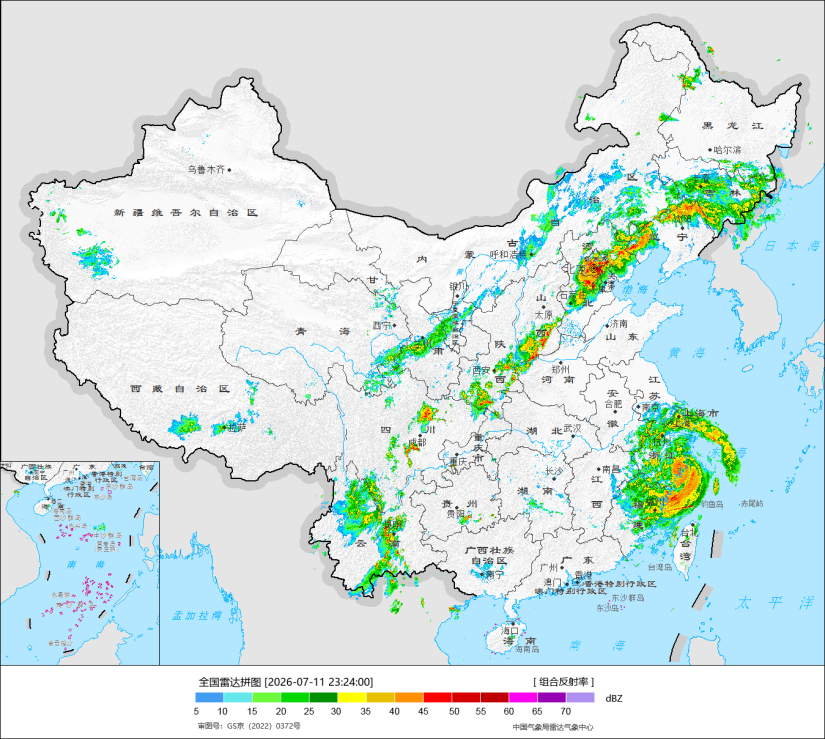
Respond Immediately to the Emergency Call, Rush to the Frontline to Deploy Emergency Observation Sites
To comprehensively boost meteorological monitoring and early warning capacity during the typhoon’s passage and address deficiencies in refined observation of offshore severe convective weather, wind and rainfall, the technical team of Qianhai Technology assembled rapidly and set off urgently on the morning of July 9 upon the order of Zhejiang Meteorological Bureau. Carrying self-developed high-precision meteorological detection equipment, the team headed for the core observation site at the radar station of Cangnan Meteorological Bureau in Wenzhou to carry out field observation experiments for Typhoon Bavi.
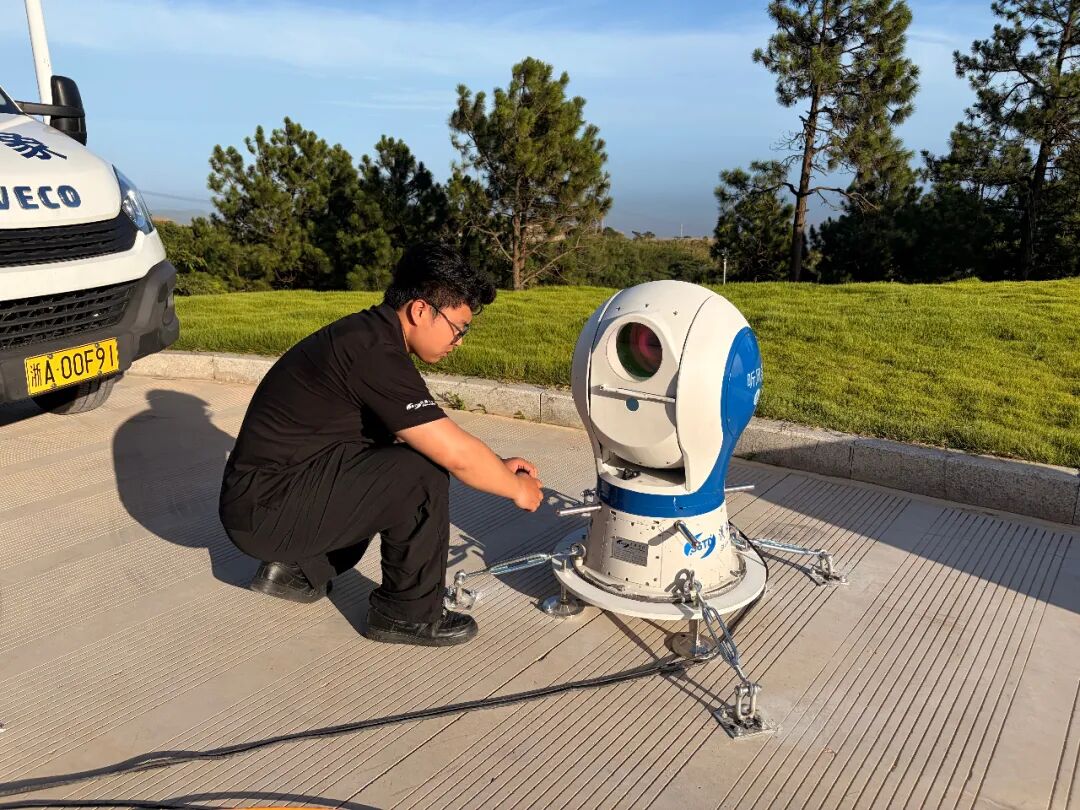
Dual Equipment Coordination to Precisely Capture Micro Meteorological Characteristics of Typhoons
At this emergency observation site, the team deployed two sets of core equipment with precise layout. The two devices work in synergy to capture full-range refined meteorological data during the typhoon transit:
The 2D Visible Disdrometer (Model SVD-2) is tailored to the heavy precipitation characteristics of typhoons. It conducts real-time monitoring of raindrop size, falling velocity and particle number concentration, and accurately distinguishes various precipitation phases. By capturing variations in the micro precipitation structure of typhoon torrential rains, the instrument provides meteorological departments with high-frequency, accurate field-measured data for judging rainfall intensity, periods of short-duration heavy rainfall and coverage areas of extreme rainstorms, greatly improving the accuracy of rainstorm early warnings.
The 3D Scanning Wind Lidar (Model SLWR-3D-20k) features full-range 3D scanning, blind zone supplementary measurement at low altitudes, and gust mutation capture capabilities. It continuously monitors wind field structures and jet stream variations before and after typhoon landfall. Effectively making up for the insufficient spatial density of observations from traditional meteorological stations, it accurately characterizes the wind rings around typhoons and the time sequence of gale impacts, delivering critical support for typhoon track analysis and wind force impact forecasting.
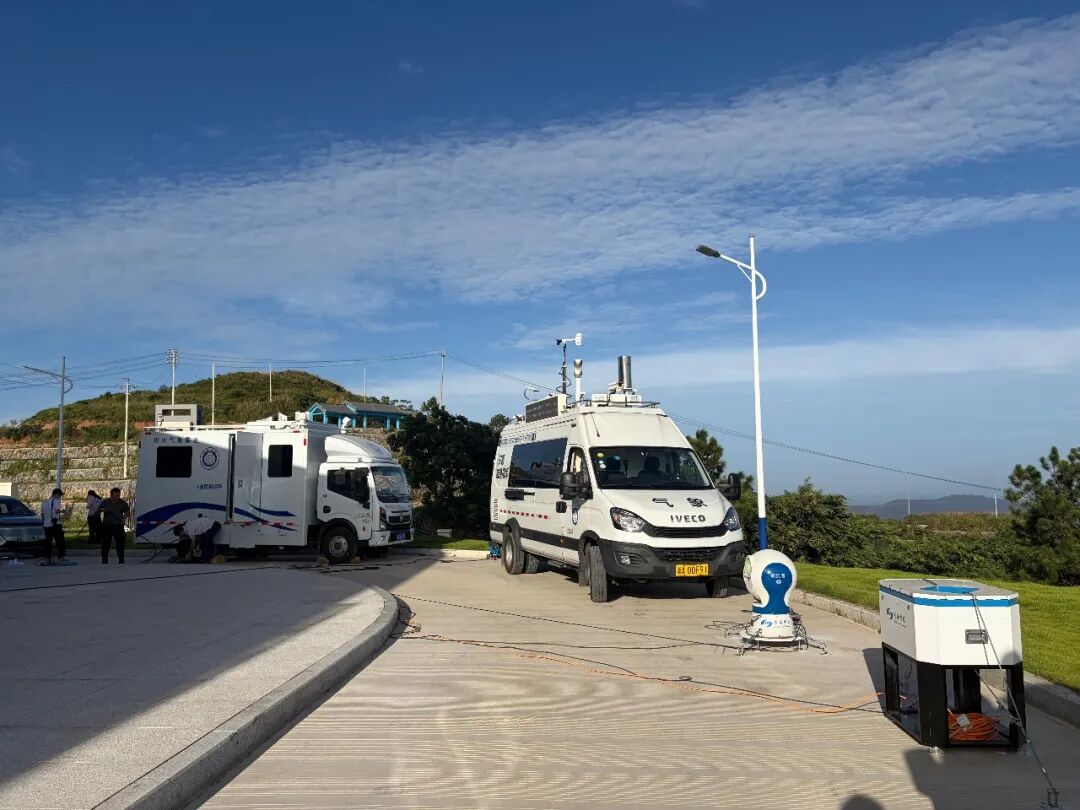
During the typhoon emergency support mission, the two sets of detection equipment deployed by Qianhai Technology maintained stable full-operation with real-time data transmission and consistently high observation accuracy. The massive volume of precise wind field and precipitation observation data effectively supplements refined typhoon observation records for the coastal areas of Cangnan. It provides vital field-measured evidence for provincial, municipal and county-level meteorological departments in analyzing typhoon tracks, intensity changes and wind-rain impact ranges, optimizing early warning and forecasting systems, and arranging flood and typhoon prevention work in a scientific manner. This empowers meteorological authorities to achieve earlier warnings, more accurate judgments and more refined prevention and control.
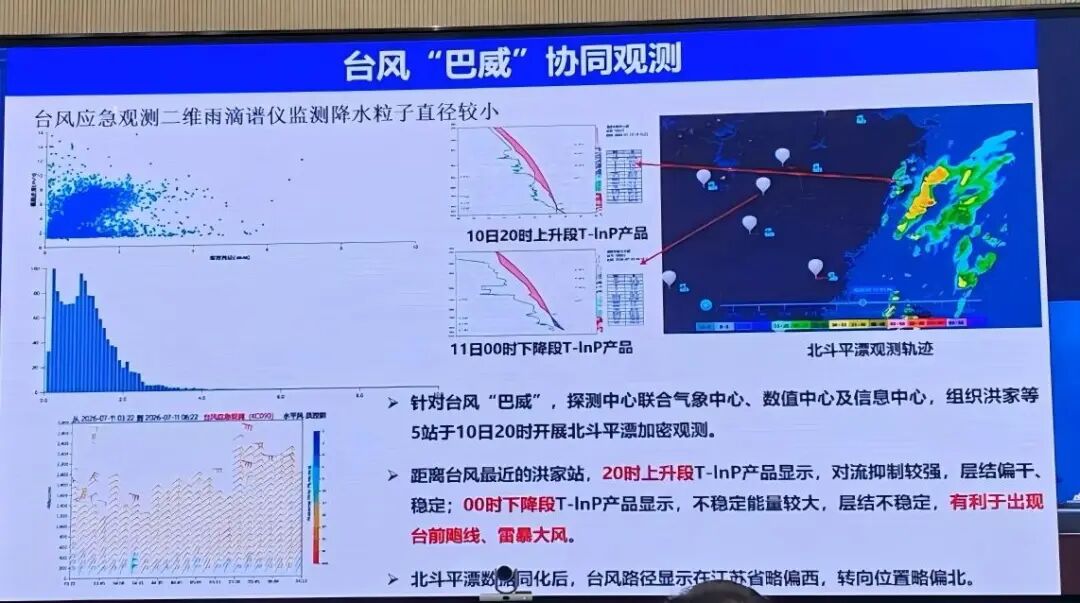
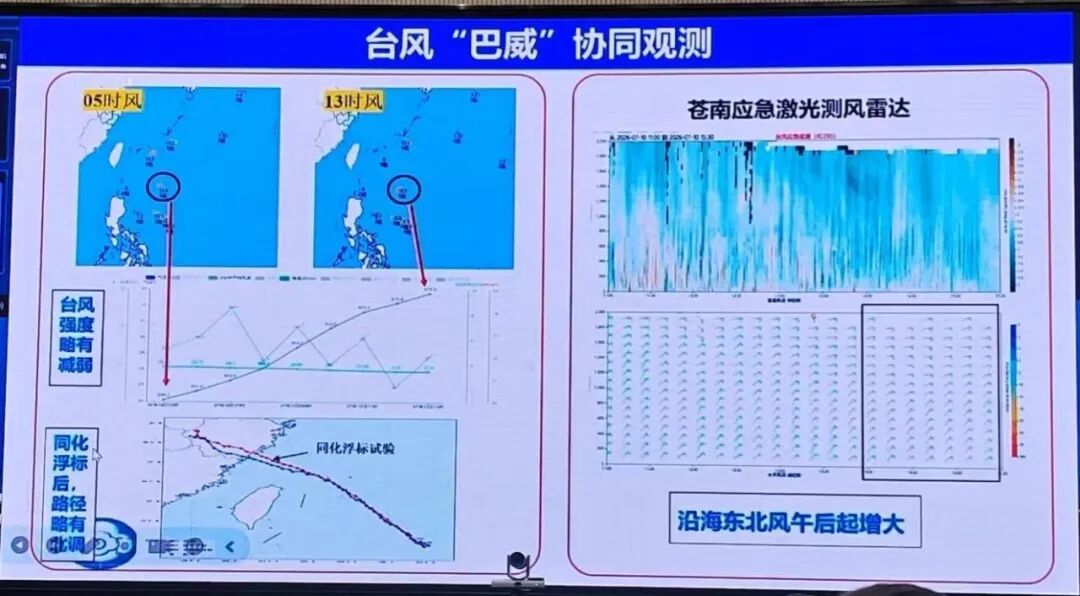
Extreme weather serves as a touchstone for testing the performance of meteorological equipment and emergency service capabilities. For a long time, Qianhai Technology has been deeply engaged in atmospheric observation and meteorological emergency support. Relying on self-developed and controllable core technologies, a mature product lineup and an efficient emergency response mechanism, the company has taken part in numerous meteorological disaster emergency observation missions and meteorological support services for major events at provincial and municipal levels. It has accumulated rich practical experience in complex weather scenarios including typhoons, severe convection and heavy rainfall.
Undaunted by wind and rain, we stand firmly by our mission. Throughout the support mission, the technical team of Qianhai Technology closely monitored the dynamics of Typhoon Bavi. The team remained on duty around the clock, ensured stable equipment operation, and continuously delivered accurate observation data, fully cooperating with meteorological authorities to complete meteorological monitoring and emergency support work.
 Next:Breaking News: Shallow-sea Technology’s 1km Medium-Range Coherent Doppler Wind LiDAR Certified with Special Meteorological Technical Equipment Permit – Another Official Endorsement of Our Leading Technology!




 WeChat
 T1-11F, Herui Science and Technology Park, Binjiang District, Hangzhou City, Zhejiang Province


